
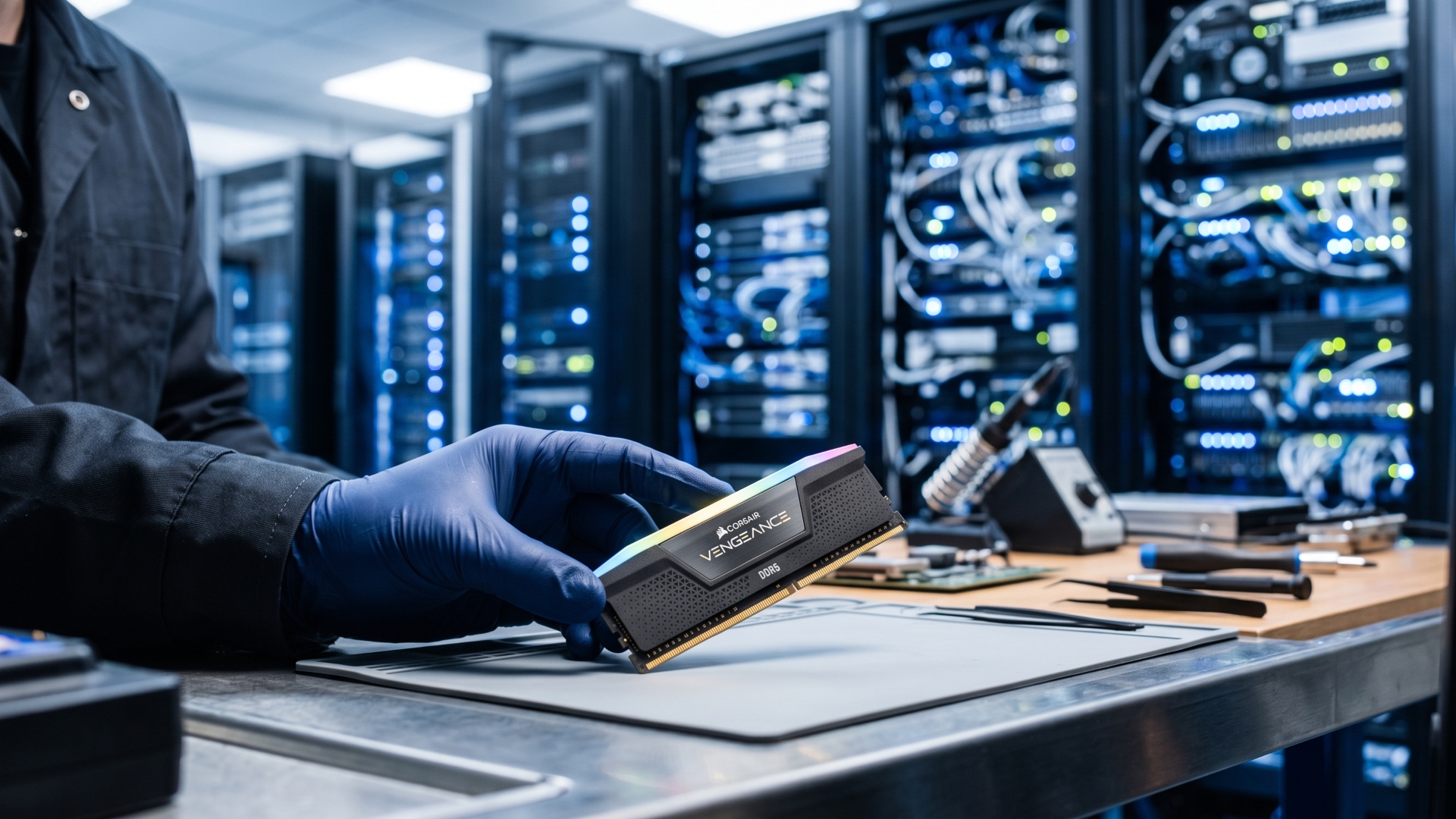
RAM Price Shortage 2026: A Practical Buyer’s Guide
Introduction
If you have shopped for a new laptop, gaming console, or smartphone recently, you have probably noticed the price tags creeping upward. The main reason is the RAM price shortage 2026, a supply crunch driven largely by the explosive growth of artificial intelligence. Memory chip makers are redirecting factory capacity away from everyday consumer products and toward the specialized high-bandwidth memory that AI data centers need to train and run large models. That shift has left less room on production lines for the ordinary DRAM and NAND flash chips found in phones, PCs, and consoles, and prices for those components have climbed sharply as a result.
This matters to anyone planning a tech purchase in the near future, because the effects are not limited to a single product category. Laptops, desktops, game consoles, handhelds, and smartphones have all seen price increases tied to memory costs, and manufacturers have warned that the situation could continue well into 2027. This guide explains what is driving the RAM price shortage 2026, which devices are most affected, and how shoppers can make smarter decisions while the market remains unsettled.
What Is Driving the RAM Price Shortage in 2026?
The root cause of the RAM price shortage 2026 is a sudden and dramatic shift in demand. Artificial intelligence data centers require enormous quantities of high-bandwidth memory (HBM) to feed the graphics processors used for training and running AI models. Because HBM and standard consumer memory are made in the same factories using similar underlying technology, chipmakers have been converting production lines that once made ordinary DDR5 memory into lines dedicated to AI-grade chips.
How AI Data Centers Are Draining the Memory Supply
The world’s memory supply is concentrated among just three major manufacturers. As these companies commit growing shares of their output to long-term supply agreements with AI chipmakers and cloud providers, less capacity remains available for the memory modules used in everyday electronics. Industry analysts have described this as an unprecedented reallocation of manufacturing capacity, one that treats consumer DRAM as a secondary priority behind AI-driven demand.
DRAM vs HBM: Why Manufacturers Are Choosing AI Over Consumers
From a business standpoint, the shift makes sense. AI-grade memory commands far higher margins than standard consumer DRAM, and long-term contracts with AI companies offer more predictable revenue. For memory makers, prioritizing HBM production is a rational response to where the money is flowing, even though it leaves consumer electronics manufacturers competing for a shrinking pool of standard chips.
How Bad Is the 2026 RAM Price Shortage, By the Numbers?
The scale of the increase has surprised even experienced industry watchers. Contract prices for conventional DRAM rose sharply in the first quarter of 2026, and further large increases followed in the second quarter as AI-related demand continued to outpace supply. By the middle of the year, some memory kits that once sold for a couple of hundred dollars were priced several times higher. Forecasts released mid-year projected that overall memory costs could climb well beyond 100% above prior levels before the situation stabilizes, with some analysts warning that severe shortages may persist into 2027.
There are early signs of a slowdown in the pace of increases, mainly because consumers and device makers are reaching the limit of what they are willing or able to pay. However, a slower rate of increase is not the same as falling prices. Memory costs are still rising each quarter, just not as steeply as during the sharpest spikes earlier in the year.
Which Devices Are Affected by the RAM Price Shortage?
Because memory chips are a core component in nearly every modern electronic device, the RAM price shortage 2026 has touched a wide range of products.
Laptops and Desktop PCs
Memory now makes up a much larger share of the total cost to build a computer than it did before the shortage began. Major PC manufacturers have raised prices across several product lines to offset higher component costs, and some models have faced longer delivery times as supply tightens.
Gaming Consoles and Handhelds
Handheld gaming devices have been especially exposed, since they combine console-level processing power with premium memory in a compact form factor. Several popular handheld models have seen their prices climb noticeably compared to earlier in their product cycle, an unusual pattern for hardware that typically gets cheaper as it matures.
Smartphones
Smartphone makers are also adjusting to rising costs, particularly for budget and mid-range devices where memory represents a larger share of the total materials cost. Rather than simply raising prices, some manufacturers are considering reducing the amount of memory included in lower-cost models to help control expenses, a practice sometimes called spec shrinkflation.
Why the RAM Price Shortage 2026 Is Different From Past Shortages
Memory prices have fluctuated before, often tied to cyclical swings in supply and demand within the electronics industry itself. What sets the current RAM price shortage 2026 apart is that the demand pulling supply away from consumers is coming from an entirely different industry: artificial intelligence infrastructure. Previous shortages tended to ease once electronics manufacturers adjusted production plans. This time, the competing demand comes from data center operators who are willing to pay significantly more for memory and are locking in supply through long-term agreements, which limits how much capacity can flow back to consumer markets even as prices rise.
This structural shift is why many analysts now describe volatile memory pricing as a longer-term feature of the market rather than a temporary disruption that will fully reverse once conditions calm down.
When Will the RAM Price Shortage in 2026 End?
There is no consensus on an exact timeline, but most forecasts agree that meaningful relief is unlikely in the short term. Some memory manufacturers have suggested that severe shortages could continue into the middle of 2027, while others have pointed to an even longer horizon before supply catches up with AI-driven demand. New manufacturing capacity takes years to build, so even if chipmakers commit today to expanding consumer-focused production, the impact would not be felt immediately.
In the meantime, buyers should expect memory-related costs to remain elevated, with the pace of increases likely to vary from quarter to quarter depending on how AI demand and consumer affordability limits interact.
How to Navigate the RAM Price Shortage 2026 as a Buyer
While individual shoppers cannot influence global chip supply, there are practical steps that can reduce the impact of higher prices on a purchase.
- Buy only the memory you need. Choosing a configuration with adequate, rather than maximum, memory can meaningfully lower the price of a new device.
- Compare prices across retailers regularly. Memory-related pricing can shift from week to week, so timing a purchase around a sale can help.
- Consider certified refurbished or previous-generation devices. Older models built before the sharpest price increases may offer better value.
- Avoid unnecessary upgrades right now. If a current device still meets your needs, waiting before upgrading may help you avoid buying at the peak of the shortage.
- Watch for signs of stabilizing prices. Reports of slowing quarter-over-quarter increases can be an early signal that better pricing may be on the way, even if it takes time to reach retail shelves.
Tips for Buying RAM Right Now
If you are shopping for a device today, prioritize sellers with transparent pricing and clear return policies, since prices can change quickly. It is also worth checking whether a retailer offers price-match guarantees, which can provide some protection if costs drop shortly after your purchase.
FAQ
Question: Why are RAM prices so high in 2026?
Answer: RAM prices are high mainly because AI data centers require large amounts of high-bandwidth memory, and chipmakers have shifted manufacturing capacity away from standard consumer memory to meet that demand, tightening supply for everyday devices.
Question: When will RAM prices go down in 2026?
Answer: Most forecasts do not expect significant price relief in 2026. Some analysts suggest the shortage could persist into 2027, since expanding memory manufacturing capacity takes years and AI-related demand remains strong.
Question: Which devices are most affected by the RAM price shortage?
Answer: Laptops, desktop PCs, gaming consoles, handheld gaming devices, and smartphones have all seen price increases tied to the shortage, with budget devices and handheld gaming hardware often affected the most.
Conclusion
The RAM price shortage 2026 is not a short-lived glitch in the electronics market. It reflects a broader shift in how memory manufacturers allocate their production capacity, with artificial intelligence infrastructure now competing directly with everyday consumer devices for the same underlying chips. Laptops, gaming hardware, and smartphones have all felt the impact, and most forecasts suggest the pressure will ease only gradually rather than disappear soon.
For shoppers, the most practical response is to buy thoughtfully: choose the memory configuration you actually need, compare prices across sellers, and avoid upgrading unless necessary until the market stabilizes further. As AI infrastructure and consumer electronics continue competing for the same limited supply, one question worth considering is how much of this new cost structure is temporary, and how much may simply become the new normal for buying tech.